
Booth Design for Trade Shows: A Complete Guide for Australian Businesses
Master booth design for trade shows with expert tips on layout, branding, merchandise, and stand-out strategies for Australian businesses and events.

Written by
Emi Nakagawa
Event Merchandise
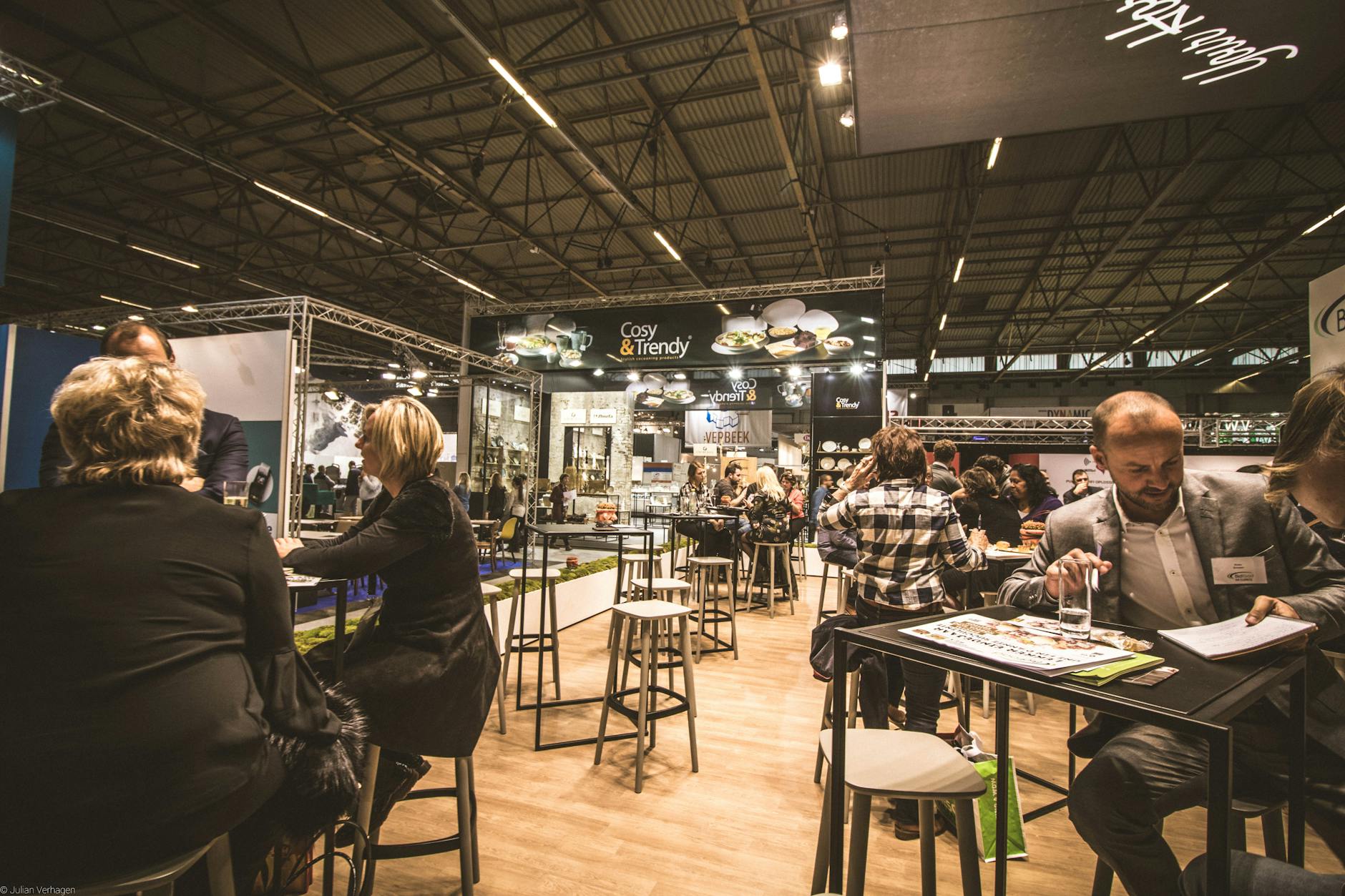
Walking into a trade show can feel like stepping into a sensory overload — hundreds of competing stands, flashing screens, branded giveaways piled high, and exhibitors jostling for attention from the same pool of visitors. In that environment, your booth design for trade show success isn’t just a nice-to-have. It’s the single most important factor that determines whether attendees stop and engage or walk straight past. Whether you’re exhibiting at a major industry expo in Sydney, a regional conference in Brisbane, or a trade event at the Melbourne Convention and Exhibition Centre, the principles of effective booth design remain the same: clarity, consistency, and a compelling reason to stop.
This guide walks you through everything you need to know — from spatial layout and signage to branded merchandise and staff presentation — so you can walk away from your next trade show with leads, connections, and a brand impression that lasts.
Why Booth Design for Trade Show Events Matters More Than You Think
Most exhibitors underestimate just how quickly first impressions form. Research consistently shows that attendees decide within seconds whether a stand is worth approaching. That means your booth needs to communicate who you are, what you do, and why it matters — almost instantly.
A well-designed trade show booth does several things at once. It attracts foot traffic, communicates brand values, creates a welcoming space for conversation, and gives visitors something tangible to take away. A poorly designed one, by contrast, can actively repel potential clients — even if your product or service is excellent.
For Australian businesses, the stakes are particularly high. Trade shows represent a significant investment in time, money, and resources. Booth space alone at major expos in capital cities can run into the thousands. Add travel costs, staff time, display materials, and promotional products, and you’re looking at a serious budget commitment. Getting the design right ensures that investment pays off.
To understand the broader landscape of how branded merchandise fits into event strategy, it’s worth exploring insights from the branded merchandise industry in Australia — the data may surprise you.
Planning Your Booth Layout: Start With the Visitor Experience
Before you think about graphics, colours, or giveaways, start with the physical space. Trade show booths come in a range of configurations — inline stands (single aisle), corner booths, peninsula stands, and island displays. Each has its own traffic flow dynamics, and your layout should respond to those realities.
Define Your Zones
A well-planned booth typically divides into three functional zones:
The attraction zone — the front-facing area visible from the aisle. This is where your primary signage, brand messaging, and visual hooks live. Keep it clean, bold, and uncluttered.
The engagement zone — where visitors move deeper into the stand for demonstrations, conversations, or product interactions. This area should be inviting and easy to navigate without bottlenecks.
The conversion zone — a quieter area (or even just a couple of chairs and a table) where meaningful conversations can happen away from the noise. This is where deals often begin.
Getting this spatial hierarchy right makes every other element of your booth more effective. A cramped, disorganised layout undermines even the most stunning graphics.
Think About Traffic Flow
Position your most eye-catching elements at the front and sides. If your stand is an inline booth, your signage must work hard from the front. If you have a corner position, capitalise on the extra exposure by placing key branding at the corner junction where two aisles meet — a strategic advantage many exhibitors fail to use.
Avoid placing tables or displays as barriers that block entry. Open, inviting booths consistently generate more foot traffic than those that feel closed off.
Signage and Visual Branding: Making an Immediate Impact
Your signage is the first thing people see, and it needs to do the heavy lifting. This isn’t the place for dense copy or complicated messaging. Think in headlines, not paragraphs.
Hierarchy of Signage
A professional trade show booth typically incorporates several layers of signage:
- High-visibility banners — pull-up banners, hanging signs, or backdrops that carry your brand name and core message. These should be readable from at least five to eight metres away.
- Mid-level graphics — table throws, display panels, or product showcases that add detail once someone has approached.
- Close-range materials — brochures, flyers, product cards, and other collateral that visitors pick up and take away.
Colour consistency across all these elements is non-negotiable. Use your brand’s PMS colours throughout, and ensure your artwork files are set up for large-format printing to avoid pixelation or colour drift.
Backdrops and Fabric Displays
Fabric backwalls and tension display systems have become increasingly popular at Australian trade shows because they’re lightweight, portable, and deliver a premium look. They pack down into carry bags, which is a significant logistical advantage if you’re exhibiting interstate — say, shipping materials from Perth to a Sydney expo.
Branded Merchandise: What to Give Away and Why It Matters
Here’s where many exhibitors either nail it or completely miss the mark. Giveaways at trade shows serve a specific strategic purpose: they create a tangible, lasting reminder of your brand after the event ends. Cheap, generic items that end up in the bin within 24 hours do the opposite — they associate your brand with disposability.
Choosing the right promotional products is a discipline in its own right. The best trade show giveaways are:
- Useful in everyday life — so they’re kept and used repeatedly
- Relevant to your audience — a corporate audience responds differently to a tradie audience
- Branded clearly but tastefully — logo placement matters
- Practical to distribute — lightweight, easy to handle, no complex assembly
For corporate expos in cities like Melbourne or Canberra, branded notebooks, quality pens, and reusable drinkware tend to perform well. Tech accessories like power banks and wireless earbuds are high-perceived-value items that generate real excitement — you can explore popular options in branded headphones and wireless earbuds to see what’s available for corporate gifting.
Branded apparel worn by your stand staff is another powerful tool. A matching polo or branded tee immediately identifies your team and projects a unified, professional image. Apparel promotions can be a surprisingly cost-effective way to extend your brand visibility throughout the event venue — your staff become walking billboards beyond the booth itself.
For more inspiration on the range of customised products available for businesses, it’s worth exploring what’s trending before you lock in your merchandise brief.
Staff Presentation and Booth Behaviour
Even the most beautifully designed booth will underperform if the people staffing it aren’t engaged and approachable. This is one of the most overlooked aspects of trade show planning.
Training Your Team
Brief your team thoroughly before the event. They should know:
- The elevator pitch (30 seconds or less)
- Which products or services to highlight
- How to qualify leads quickly and efficiently
- How to use whatever lead capture system you’re running
Body language matters enormously. Staff sitting down, staring at phones, or huddled in conversation with each other are invisible deterrents to visitors. Train your team to stand near the front of the booth, make eye contact, and initiate conversations naturally.
Branded Uniforms Create Cohesion
Matching staff attire reinforces your brand identity and makes your team easy to identify. Whether it’s embroidered polos, printed t-shirts, or branded caps, uniformity signals professionalism. This is especially important at large expos where visitors are navigating dozens of stands simultaneously.
Managing the Logistics of Your Trade Show Presence
Good booth design doesn’t stop at the visual. The logistical side of exhibiting — getting everything to the venue on time, setting up efficiently, and packing down without chaos — is just as important.
Timelines and Ordering Merchandise
If you’re ordering custom promotional products or branded apparel, build in enough lead time. Standard turnaround for most decorated merchandise in Australia is five to fifteen business days depending on the product and decoration method. Rush orders are possible but typically attract a premium.
Artwork proofs need approval before production begins, so factor that into your timeline. If you’re ordering for a Brisbane trade show in early April, don’t be placing orders in late March.
Budget Allocation
A sensible budget breakdown for a trade show booth might look something like this:
- 40–50% on display materials (signage, banners, backdrop, display stands)
- 20–30% on promotional merchandise and giveaways
- 10–15% on staff uniforms and apparel
- 10–15% on printed collateral (brochures, business cards, flyers)
Adjust these proportions based on your specific objectives and the nature of the event. A product-focused expo might require more investment in display and demonstration materials; a networking-heavy conference might favour higher-quality branded gifts.
For more strategic guidance on maximising your presence at trade show booths, there’s a deeper dive available that covers booth strategy from a merchandise perspective.
Eco-Friendly Booth Design: A Growing Priority
Sustainability is no longer a niche consideration — it’s increasingly expected by Australian audiences across industries. Many organisations in sectors like government, education, and healthcare are actively seeking out exhibitors who share their environmental commitments.
Consider incorporating eco-friendly promotional products into your giveaway strategy: bamboo pens, recycled tote bags, reusable coffee cups, or seed paper notepads. These choices signal values alignment and often generate more positive conversation than generic plastic merchandise.
Your display materials can also reflect sustainability values. Reusable and modular display systems that can be reconfigured for different events reduce waste and lower your long-term cost per event.
After the Show: Following Up and Measuring ROI
Booth design for trade show success doesn’t end when you pack up the stand. The follow-up process is where exhibiting investment is either recovered or lost.
Have a clear lead management system in place before the event — whether that’s a CRM integration, a simple spreadsheet, or a business card scanning app. Follow up within 48 to 72 hours while you’re still fresh in people’s minds.
Track your results: number of leads captured, conversations had, connections made, and — ultimately — business generated. This data will directly inform your approach to the next event and help you justify the investment internally.
Key Takeaways
Getting your booth design for trade shows right is a multi-layered challenge, but entirely achievable with careful planning. Here are the essentials to remember:
- Lead with clarity — your booth’s visual identity should communicate who you are and what you do within seconds of someone seeing it
- Design for the visitor journey — think in zones (attraction, engagement, conversion) and optimise traffic flow through your stand
- Choose merchandise strategically — useful, quality branded items create lasting impressions; cheap, generic giveaways do the opposite
- Invest in staff presentation — branded uniforms, trained teams, and positive body language are as important as any graphic or display
- Plan your timeline and budget carefully — allow adequate lead time for merchandise ordering, proof approvals, and logistics, and allocate budget across all booth elements proportionally
- Measure everything — track leads, follow up promptly, and use the data to continuously improve your trade show approach
With the right design, the right products, and the right people, your next trade show presence can be one of the most powerful brand-building tools in your marketing calendar.